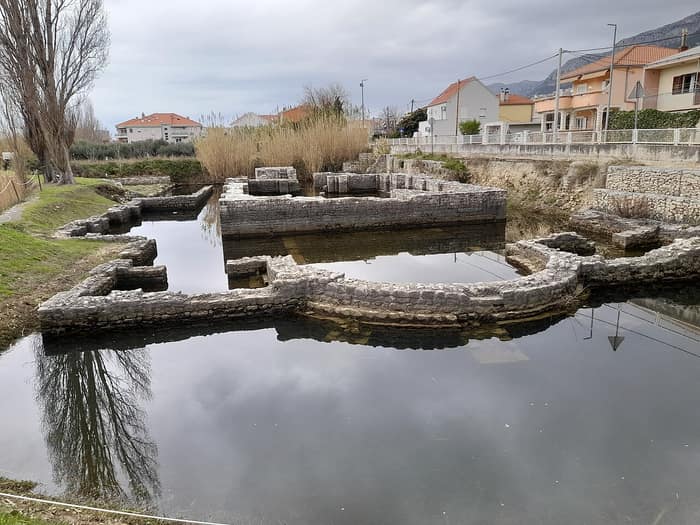
Hollow Church: the ruined coronation church at Solin
The Hollow Church (Šuplja crkva), officially the church of St Peter and Moses, is the ruin of an 11th-century Romanesque church in Solin, just east of ancient Salona near Split. It is remembered as the place where King Zvonimir was crowned, and it is one of the surviving churches built by the early Croats. Now an archaeological site beside the River Jadro, it is a quiet, evocative stop for anyone interested in medieval Croatia.
A Croatian king was crowned here in 1075, yet the church is best known by a nickname meaning “hollow”, earned when war and time stripped away its roof.
The history of the Hollow Church
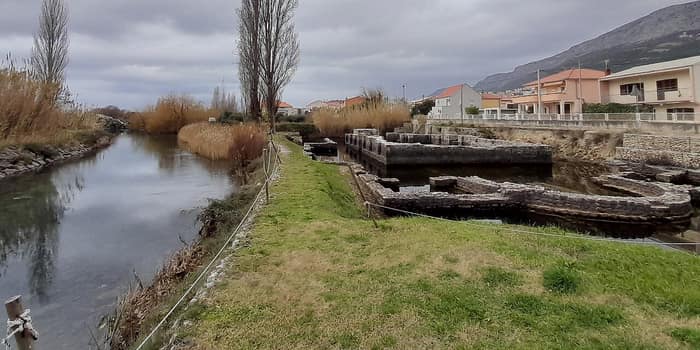
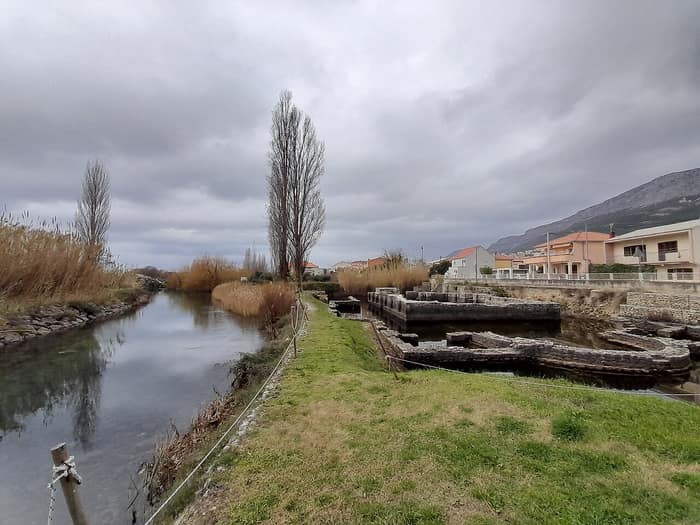
The site was first used by early Christians, who built a church and a cemetery here. In the 11th century the Croats built a new church on the older foundations, next to the remains of a 6th-century Byzantine chapel. It was the largest early Croatian church in the area, and it belongs with churches such as St Stephen and St Mary in Solin among the surviving buildings of the Croats from that century. The older walls are still partly visible along the fence that separates the site from the road.
The church is best known as a coronation church. In 1075 a legate of Pope Gregory VII crowned King Zvonimir here. It was dedicated to two saints, Peter and Moses, and an inscription on the altar screen read, in translation, “Saint Peter, receive the gift of your servant, the honourable Moses”. It had three aisles, about 26 metres long and 13 metres wide, and three apses. A narthex stood at the western entrance and a bell tower on the south side, of which only a few steps remain. The narthex held a Roman sarcophagus that probably contained an important figure of the early Croatian period, perhaps even a king.
A map by Camocio from 1571, kept in the archive in Zadar, still shows the church complete with its bell tower. During the wars between Venice and the Ottomans, parts of the church and its roof were destroyed, and in the 17th century people began to call it the “Hollow Church”. The rising bed of the Jadro has also left part of it partly submerged.
Modern excavation began in the 1920s. In 1931 Ejnar Dyggve carried out work here, which ended after the death of Frane Bulić in 1934. Ljubo Karaman resumed the work in 1935 for a time, some restoration followed in the 1950s, and the most thorough archaeological investigation took place in 1990–1993. The site has been secured and largely excavated, though it remains threatened by the waters of the Jadro and by a nearby road.
Curiosities about the Hollow Church
- Despite its official name, the church is known to almost everyone as Šuplja crkva, the “Hollow Church”, a name that dates from the 17th century.
- It was dedicated to two saints, Peter and Moses; the pairing is known from the inscription on its altar screen.
- Ejnar Dyggve saw in carved relief fragments from the church a scene of King Zvonimir receiving homage after his coronation; other scholars read the figure as Petar Krešimir IV or as a general image of Christ Pantocrator.
- Some scholars believe that the panels forming the font in the Baptistery of St John in Split, including a famous relief of a ruler on a throne, came from this church.
- The Roman sarcophagus once found in the narthex probably held a person of high standing from the early Croatian period, perhaps a king.
- On Camocio's map of 1571 the church still has its bell tower and appears intact.
Tours near Hollow Church
Experiences in the area that you can book online with Viator:

GROUP/ PRIVATE Walking History Tour of SPLIT with Daniela
See details ›
Private Walks & Storytelling - the best small group tour in Split
See details ›
Split Game of Thrones Tour & History Walk Top-Rated All inclusive
See details ›
Private Sailing Tour Omiš - Brač with Homemade Lunch, Wine & Beer
See details ›Visiting the Hollow Church
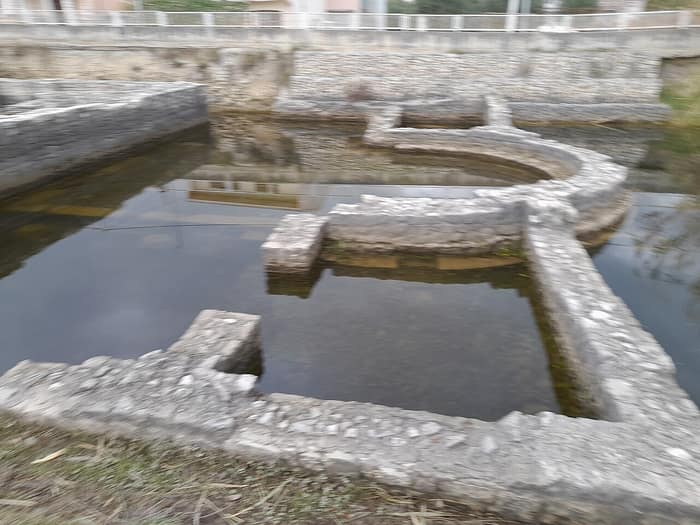
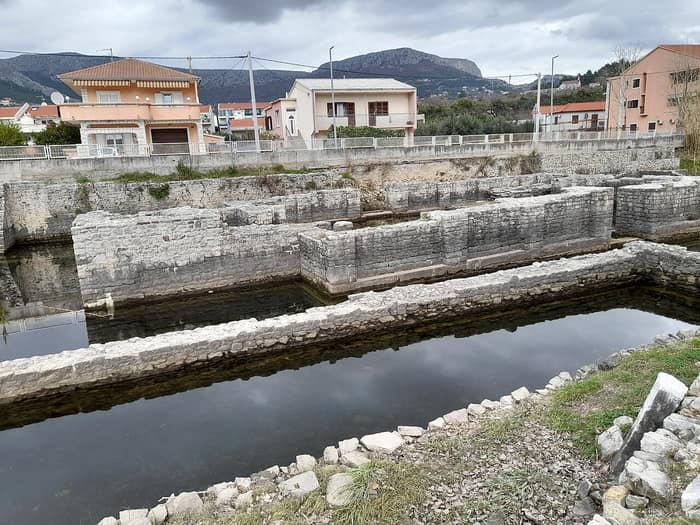
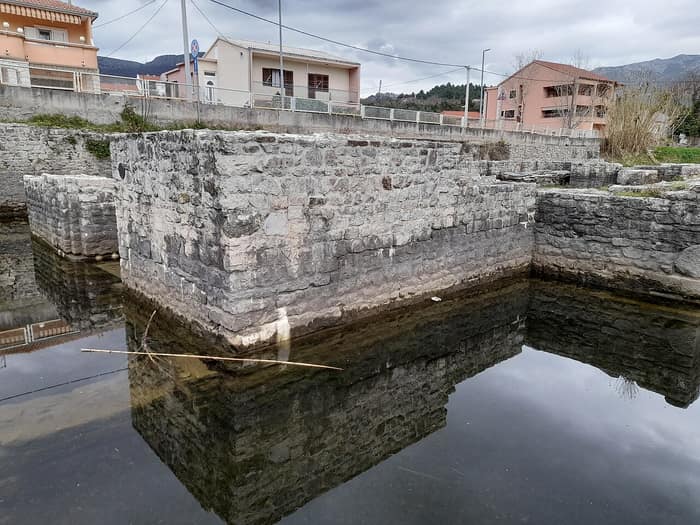
- Expect an open archaeological site rather than a roofed building: the walls, the layout of the three aisles and the plan of the older church can be traced on the ground.
- The site lies on the right bank of the River Jadro, between the road to the Jadro spring and the river. Parts of it are close to the water and to a road.
- Look for the few surviving steps of the bell tower on the south side and the older church walls along the fence.
- Opening arrangements are not stated in the sources. Check the current conditions before you go.
- It combines naturally with Salona, only about a kilometre away, and with Klis Fortress and the Golden Gate in Split.
Opening hours, access and conditions can change. Check before you go.
Map: where Hollow Church is
Photos of Hollow Church
Questions
What is the Hollow Church in Solin?
It is the ruin of an 11th-century Romanesque church, officially the church of St Peter and Moses, standing just east of ancient Salona in Solin. Šuplja crkva is its popular name.
Why is it called the Hollow Church?
In wars between Venice and the Ottomans parts of the church and its roof were destroyed. In the 17th century people began to call it the “Hollow Church”.
Who was crowned in the Hollow Church?
King Zvonimir was crowned here in 1075 by a legate of Pope Gregory VII, according to the Croatian Wikipedia.
How old is the Hollow Church?
The church dates from the 11th century and was built on the foundations of an earlier Christian church and cemetery.
How far is the Hollow Church from Salona?
It lies about a kilometre from Salona, east of the ancient city, on the right bank of the River Jadro.
Is the Hollow Church worth visiting?
It is a modest ruin, but for those interested in early medieval Croatia it is a rare site linked to a coronation. It pairs well with a visit to Salona.
Also nearby
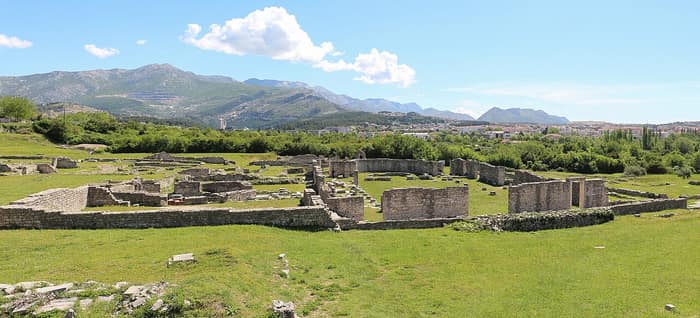
Salona
Solin · Roman capital of Dalmatia and Croatia's largest archaeological park
800 m away
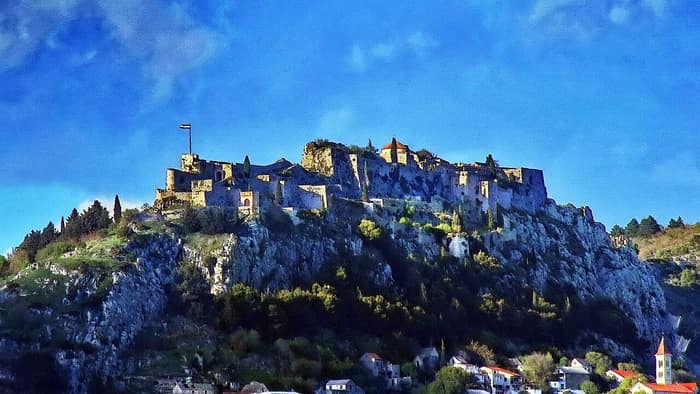
Klis Fortress
Klis · royal seat and frontier fortress above Split
3 km away
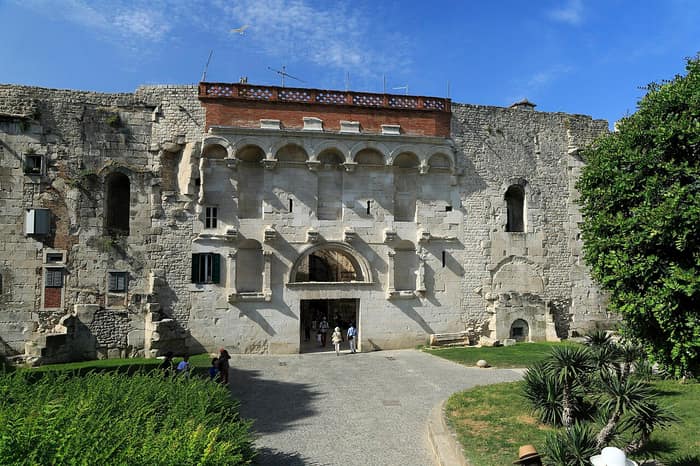
Golden Gate
Split · Roman north gate with empty niches and a tiny church
5.5 km away
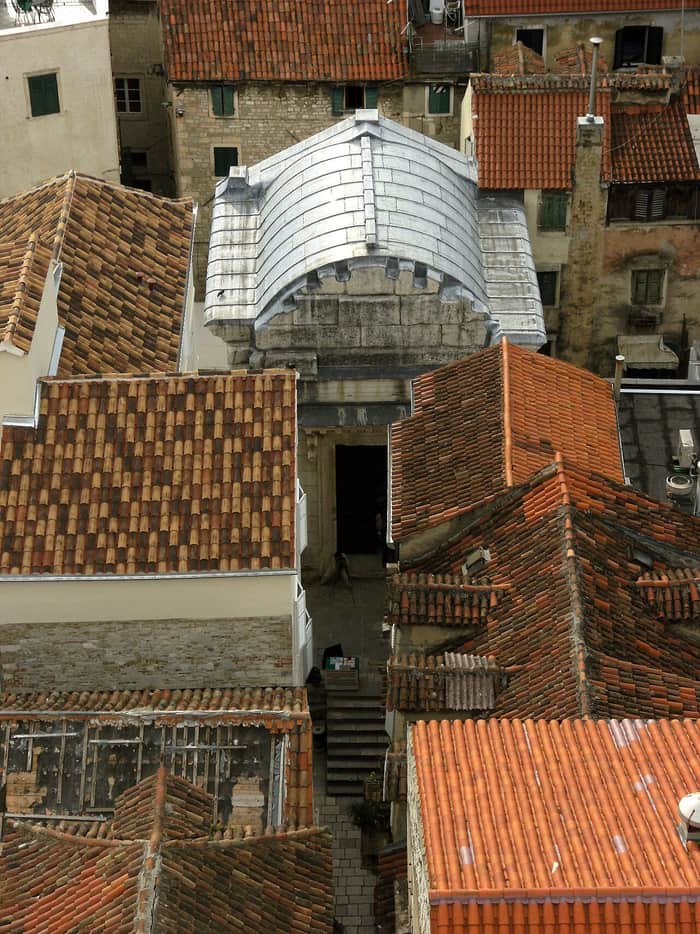
Temple of Jupiter, Split
Split · Roman temple turned baptistery inside Diocletian's Palace
5.5 km away