Monument to the Victory of the People of Slavonia near Kamenska
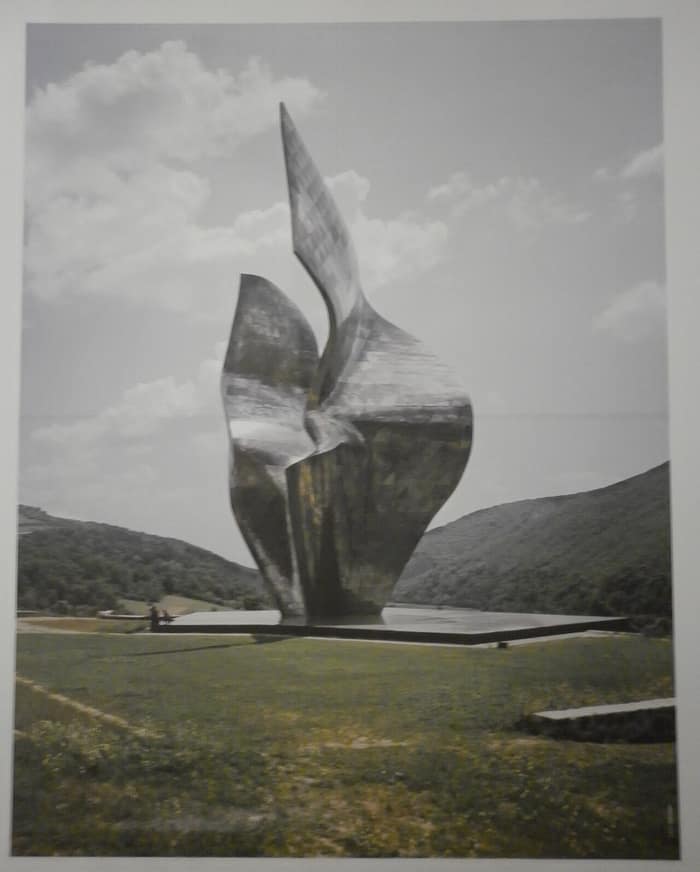
The Monument to the Victory of the People of Slavonia (also called the Monument to the People-Hero of Slavonia) was a Second World War memorial by the sculptor Vojin Bakić on the slopes of Papuk, beside the village of Kamenska in Slavonia. It no longer exists, but its story, from the Yugoslav-era design to its destruction in 1992, makes it a significant chapter in the history of modern monuments in Croatia.
When it opened in 1968, this 30-metre stainless-steel sculpture was described as the largest postmodern sculpture in the world. It took the best part of a decade to build and stood for only about 24 years.
The history of the monument near Kamenska
The memorial honoured the fighters and civilians of Slavonia in the Second World War. It was officially dedicated to the Sixth Slavonian Corps of the Yugoslav Partisan army, which had been founded in 1943. Papuk, where the monument stood, and the other mountains around the Požega basin had been strongholds of the Partisan movement and served as safe areas for thousands of Serb civilians fleeing Ustaše persecution. Forces of the Independent State of Croatia and the German Wehrmacht tried several times to destroy the Partisan territory in Slavonia, and one of the fiercest attacks came in March and April 1943.
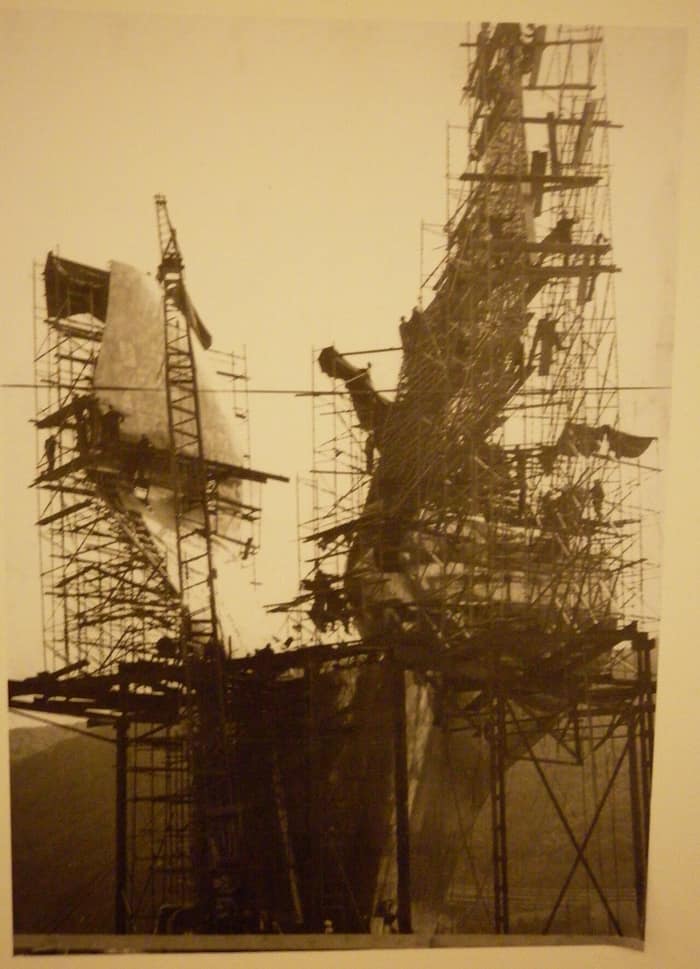
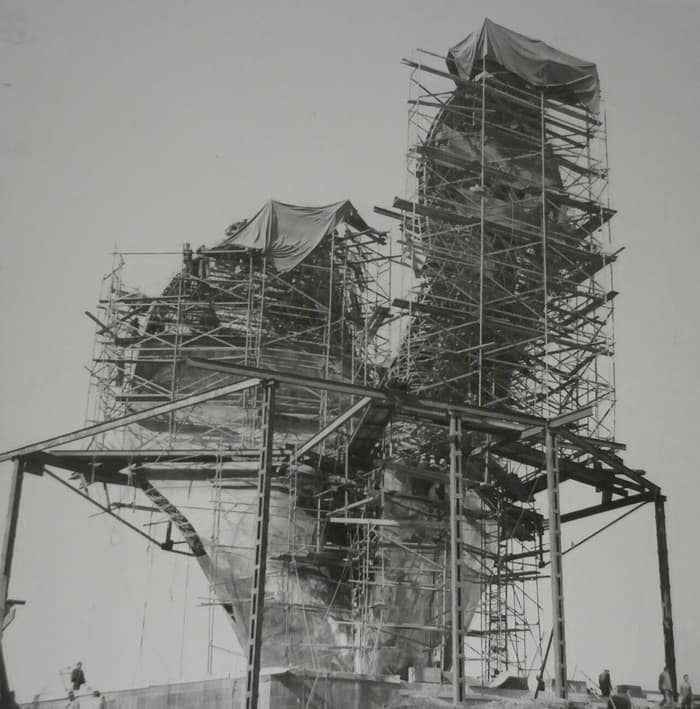
Work began in 1957, after Vojin Bakić won a competition held for the commission. Construction continued for about a decade. The finished monument was 30 metres tall and clad in stainless steel, which was imported from Sweden at some effort. Military experts from the Krušik ammunition factory in Valjevo tested the strength and resistance of the steel. The engineer Boris Medja, who worked with Bakić from 1958 to 1988, carried out the demanding static and structural calculations.
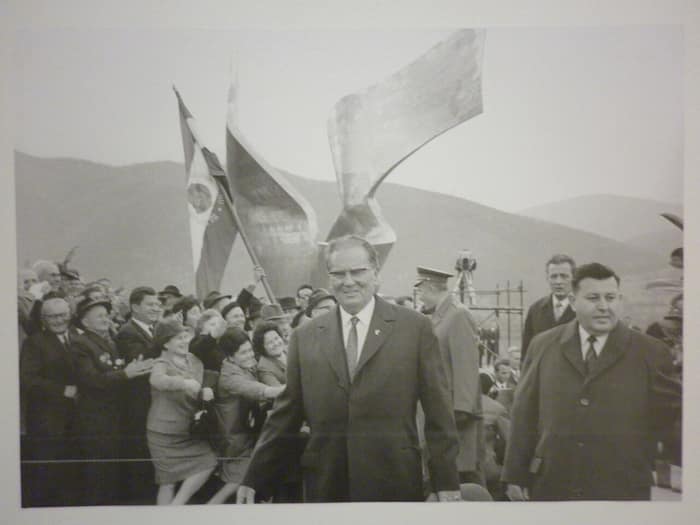
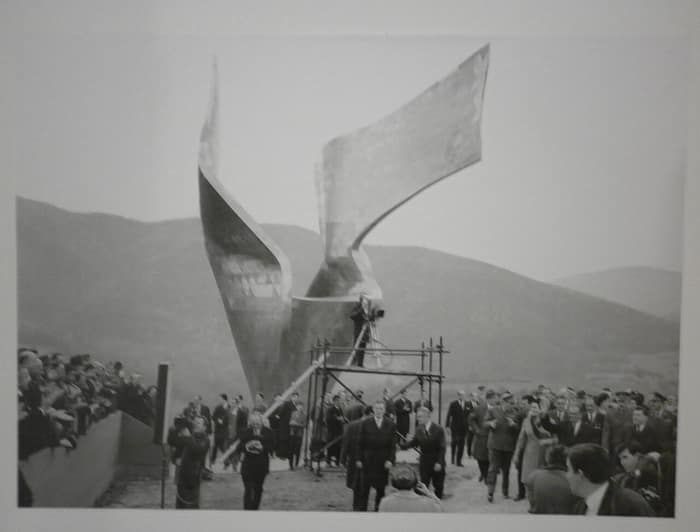
The monument was unveiled on 9 November 1968 by Yugoslav president Josip Broz Tito, on the 25th anniversary of the founding of the Sixth Slavonian Corps, in front of thousands of onlookers. At that moment it was described as the largest postmodern sculpture in the world. Bakić later used a similar reflective steel cladding on his monument on Petrova Gora.
During the break-up of Yugoslavia, Bakić's works were reportedly on a list of monuments to be demolished. On 21 February 1992 the monument was blown up. Its massive concrete structure survived several earlier attempts with explosives and fell only at the ninth attempt. The sources attribute the demolition to soldiers of the newly formed Croatian army, but the exact background is described as unclear, and the structure was destroyed down to its foundations.
Curiosities about the monument
- Building it took from 1957 to 1968, a full decade, and the structure stood for only about 24 years before being demolished.
- At 30 metres it was described at its opening as the largest postmodern sculpture in the world.
- The stainless steel for its cladding had to be imported from Sweden.
- Military experts from a Valjevo ammunition factory tested the steel for strength and resistance.
- It was unveiled by Tito, accompanied by his wife Jovanka, in front of thousands of people.
- Its concrete core withstood several explosive charges and fell only at the ninth attempt.
Tours near Monument to the Victory of the People of Slavonia
Experiences in the area that you can book online with Viator:


Visiting the site near Kamenska
- The monument was destroyed in 1992, so there is no standing sculpture to see. Photographs of its construction and opening can be found on Wikimedia Commons.
- The sources do not say what remains on the slopes of Papuk today, so check locally before planning a trip specifically for the site.
- The Kamenska monument is closely tied to Bakić's later work on Petrova Gora, which is described on its own page of this guide.
- Other places in the wider area, such as Brod Fortress (about 52 km) and the Prandau-Normann Castle (about 77 km), can be combined into a longer trip through eastern Croatia.
Opening hours, access and conditions can change. Check before you go.
Map: where Monument to the Victory of the People of Slavonia is
Photos of Monument to the Victory of the People of Slavonia
Questions
What was the Monument to the Victory of the People of Slavonia?
It was a 30-metre stainless-steel Second World War memorial by Vojin Bakić near Kamenska, dedicated to the Partisan fighters and civilian victims of Slavonia.
Where was the monument located?
It stood on the slopes of Papuk, beside the village of Kamenska, in today's Požega-Slavonia County.
When was it built and opened?
Construction ran from 1957 to 1968, and Josip Broz Tito unveiled it on 9 November 1968.
What happened to the monument?
It was blown up on 21 February 1992. The concrete structure fell only after several attempts, and the exact circumstances are described as unclear.
Can you still visit the Monument to the Victory of the People of Slavonia?
No standing monument remains. Sources do not describe what is left at the site, so it is best to check locally.
Who designed it?
The sculptor Vojin Bakić, who also designed the monument on Petrova Gora.
Also nearby
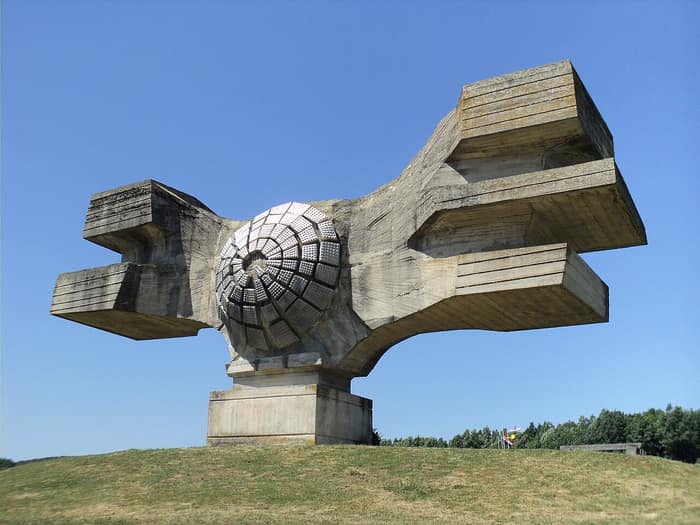
Monument to the Revolution of the People of Moslavina
Podgarić · abstract Yugoslav-era sculpture in the Moslavina hills
59 km away
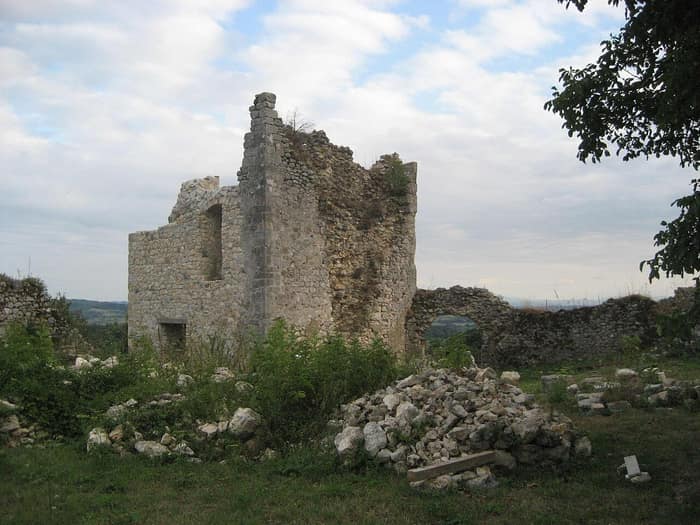
Zrin Castle
Zrin · ruined cradle of the Zrinski family
91 km away
Lepavina Monastery
Lepavina · Orthodox monastery with a Baroque church near Koprivnica
96 km away
Gvozdansko Castle
Gvozdansko · Zrinski fortress and mint, known for the siege of 1577
105 km away