Walls of Ston: the long fortified wall between two Dalmatian towns
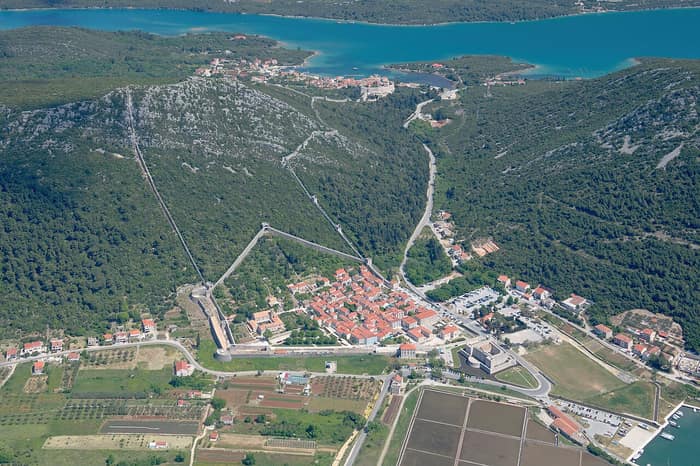
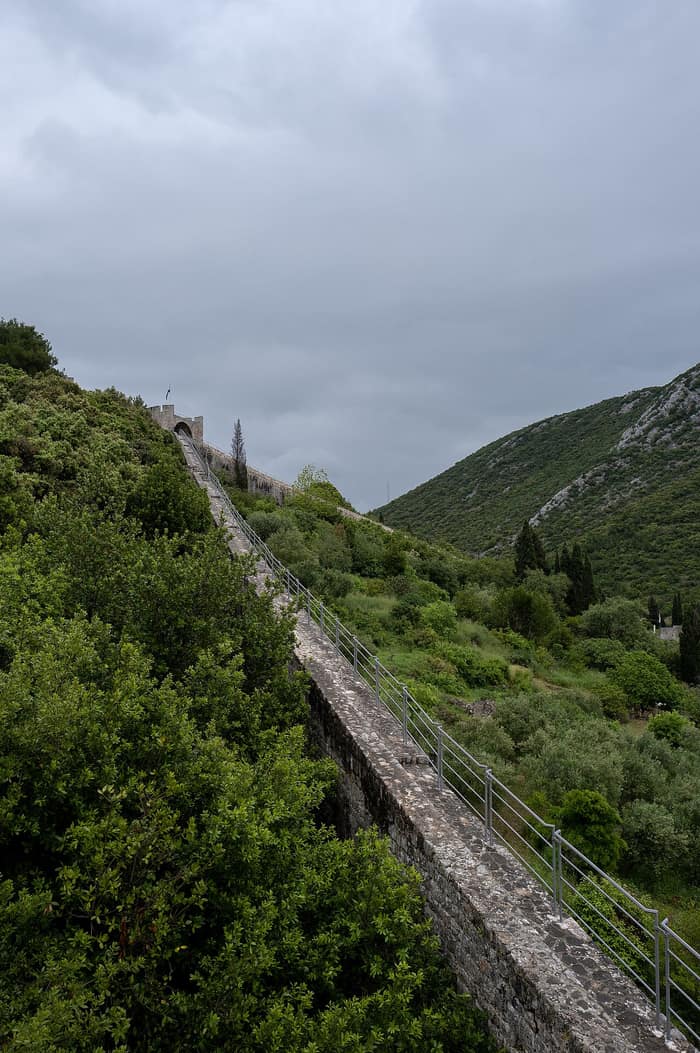
The Walls of Ston (Stonske zidine) are a chain of defensive stone walls and towers on the Pelješac peninsula in southern Dalmatia. They link the town of Ston with Mali Ston across the narrow neck of the peninsula and are among the longest preserved fortification systems in the world. Begun in 1358 by the Republic of Ragusa, they make a rewarding fortress in southern Croatia, far from the usual crowds.
Once more than 7 km long, the Walls of Ston were raised to protect one precious thing above all: salt. Their nickname, the “European Great Wall of China”, is only half a joke.
The history of the Walls of Ston
In the early 1330s the Republic of Ragusa (Dubrovnik) acquired the Pelješac peninsula, including Ston, and soon needed to protect it. The prize was the salt pans, which brought the republic great wealth, together with the shellfish beds and the town itself. Building began in 1358, in the second half of the 14th century. The plan was unusually ambitious: a wall across the narrowest part of the peninsula, with two planned fortified towns, Ston in the south and Mali Ston in the north, to house the people who guarded the border and worked the salt pans. Ston followed the layout of Dubrovnik, but because it was built on prepared ground the model was followed even more closely than in Dubrovnik itself.
The system took shape over almost four centuries, adapting to the terrain and to changing weapons. Its original length was about 7,000 m. The walls were reinforced by around 40 towers and five fortresses; the centres of the system are the Veliki kaštio fortress in Ston, Koruna in Mali Ston and the fortress on Podzvizd hill. Between 1461 and 1464 the Florentine architect Michelozzo worked on the defences for Ragusa, and the sources also name Bernardino Gatti of Parma and Giorgio da Sebenico (Juraj Dalmatinac). The Field Gate (Poljska vrata) carries a Latin inscription dated 1506. The salt pans, according to the Croatian Wikipedia, brought Ragusa 15,900 ducats a year.
Inside, Ston was laid out on a grid of three streets running north to south and three running east to west, making fifteen equal blocks of ten houses each. Among the public buildings, the Gothic Republic Chancellery and the Bishop's Palace stand out.
The long decline began in 1667, when a catastrophic earthquake brought down about half a kilometre of the walls. After the fall of the Republic, demolition began: the Austrian authorities took stone for schools and community buildings and for a triumphal arch built for the Emperor's visit in 1884, and the wall around Mali Ston was pulled down. The demolition stopped after the Second World War. Earthquakes in 1979 and 1996 did further damage. A restoration project started in 2004, part of the walls reopened to visitors in 2009, and by 2013 the whole route to Mali Ston had been repaired. Today the walls run for about 5.5 km, with some 20 of the original towers surviving.
Curiosities about the Walls of Ston
- The walls are nicknamed the “European Great Wall of China”, and they remain among the longest preserved fortification systems in the world.
- The Great Wall (Veliki zid) on Podzvizd is about 1,200 m long. Chronicles say it took only 18 months to build and cost 12,000 ducats.
- Ston and Mali Ston were laid out as planned towns, and Ston's grid of fifteen equal blocks, each with ten houses, copies the plan of Dubrovnik.
- The salt pans that the walls were built to protect are still worked today.
- Stone from the walls was reused in the 19th century, even for a triumphal arch built for the Austrian Emperor's visit in 1884.
- Since 2008 the STONe Wall Marathon has included a stretch along the full length of the walls, and a world record exists for the fastest run from Ston to Mali Ston.
Tours near Walls of Ston
Experiences in the area that you can book online with Viator:


Visiting the Walls of Ston
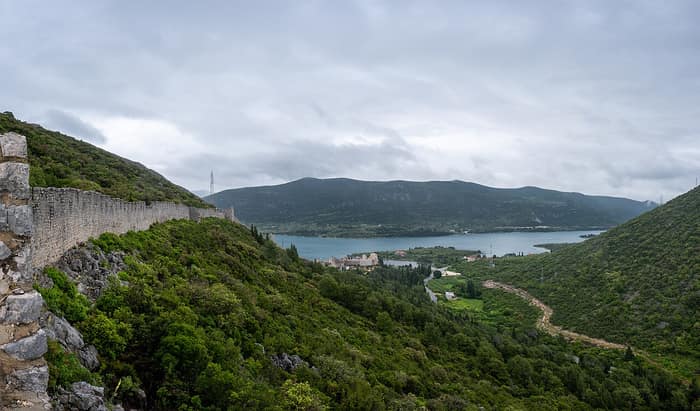
- The main attraction is the walk along the wall between Ston and Mali Ston. According to a 2013 report, the first section above Ston takes about 15 minutes and the way to Mali Ston about 30 minutes.
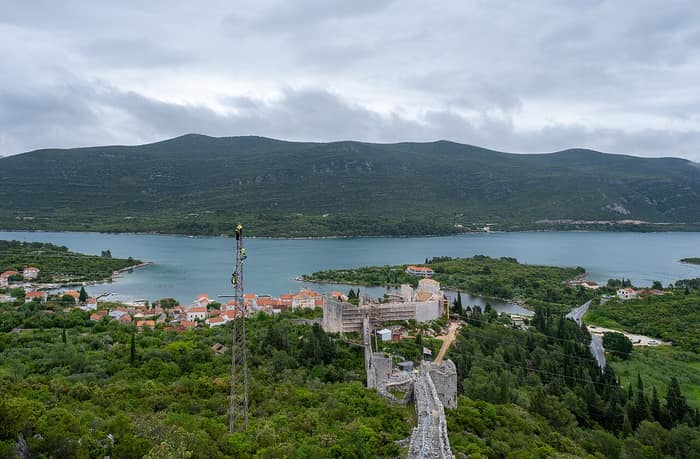
- Look for the Field Gate with its 1506 inscription, the Veliki kaštio fortress in Ston and the Koruna fortress at Mali Ston.
- Part of the walls was restored and reopened only in recent years, so check the current opening hours and which sections are open before you go.
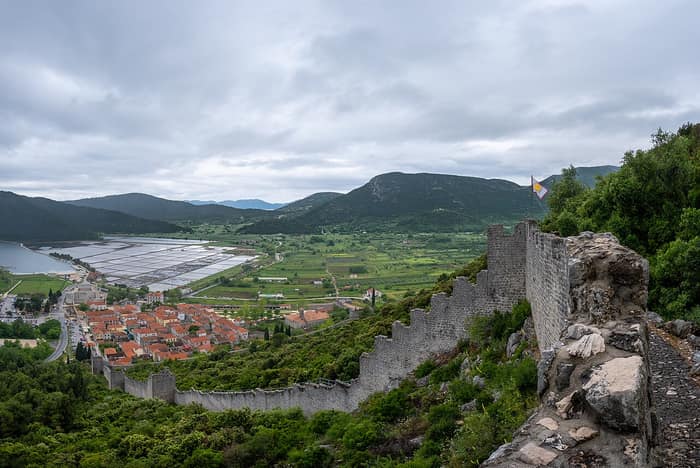
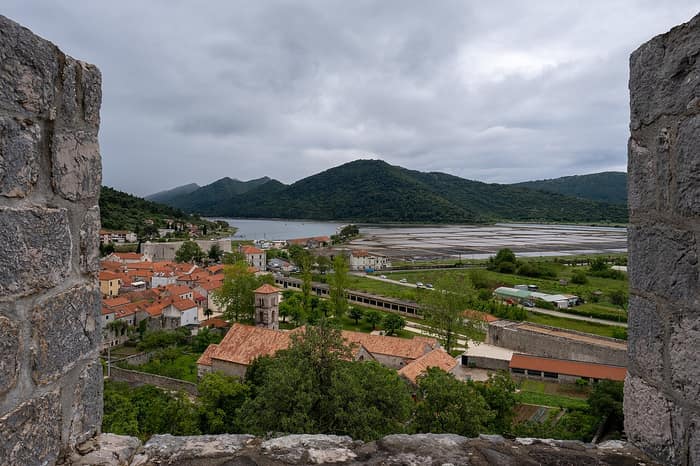
- From the wall you look over the town, the salt pans and the bay of Mali Ston, which has shellfish beds.
- The Pelješac Bridge is roughly 17 km away and Dubrovnik about 40 km, so the walls fit well into a day on the Pelješac.
Opening hours, access and conditions can change. Check before you go.
Map: where Walls of Ston is
Photos of Walls of Ston
Questions
Where are the Walls of Ston and what are they?
They stand on the Pelješac peninsula in southern Dalmatia and link the town of Ston with Mali Ston. They are a defensive system of walls, towers and fortresses built by the Republic of Ragusa.
How long are the Walls of Ston?
The walls were originally more than 7 km long. The preserved route linking Ston and Mali Ston is about 5.5 km.
Why were the Walls of Ston built?
The Republic of Ragusa built them to protect Ston, the Pelješac peninsula and above all the valuable salt pans, as well as the shellfish beds.
When were the Walls of Ston built?
Construction began in 1358 and the system was completed in the 15th century. It continued to be adapted for almost four centuries.
How long does it take to walk the Walls of Ston?
A 2013 report gives about 15 minutes for the first section above Ston and about 30 minutes for the route to Mali Ston. Check current conditions locally.
Why are they called the Great Wall of China of Europe?
The nickname refers to their exceptional length: they are among the longest preserved fortification systems in the world.
Also nearby

Pelješac Bridge
Pelješac · 2.4 km cable-stayed bridge opened in 2022
17 km away
Narona
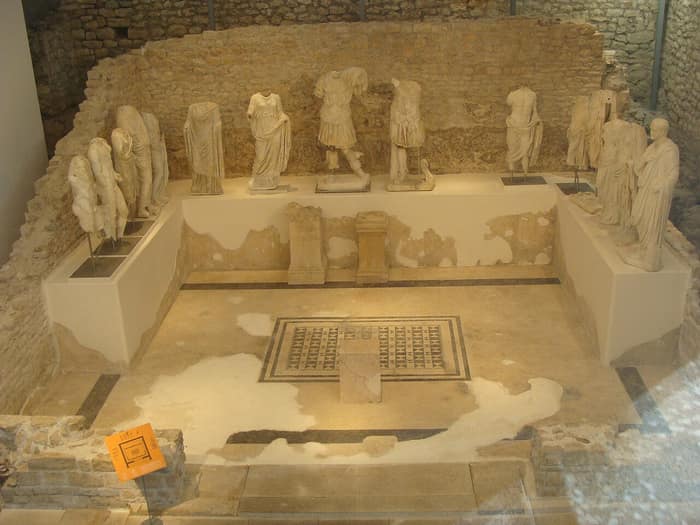
Narona · Roman colony and Augusteum on the Neretva
28 km away
Lovrijenac
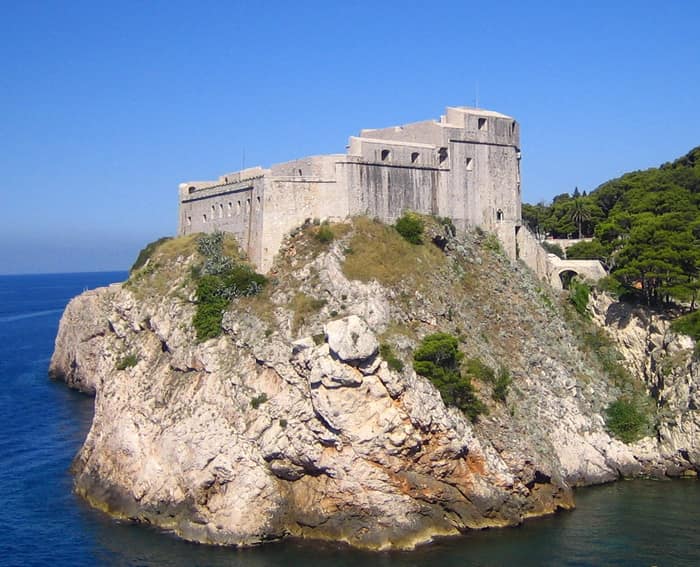
Dubrovnik · rock fort with a famous freedom motto
40 km away
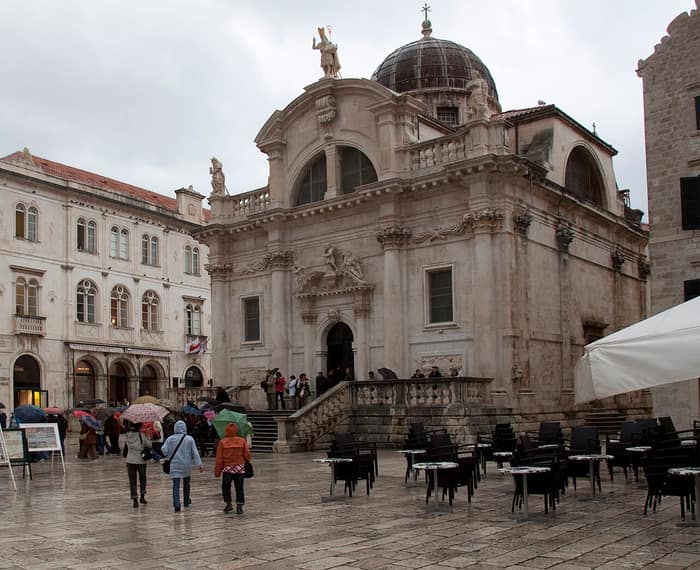
St Blaise's Church
Dubrovnik · Baroque church of the city's patron saint
40 km away